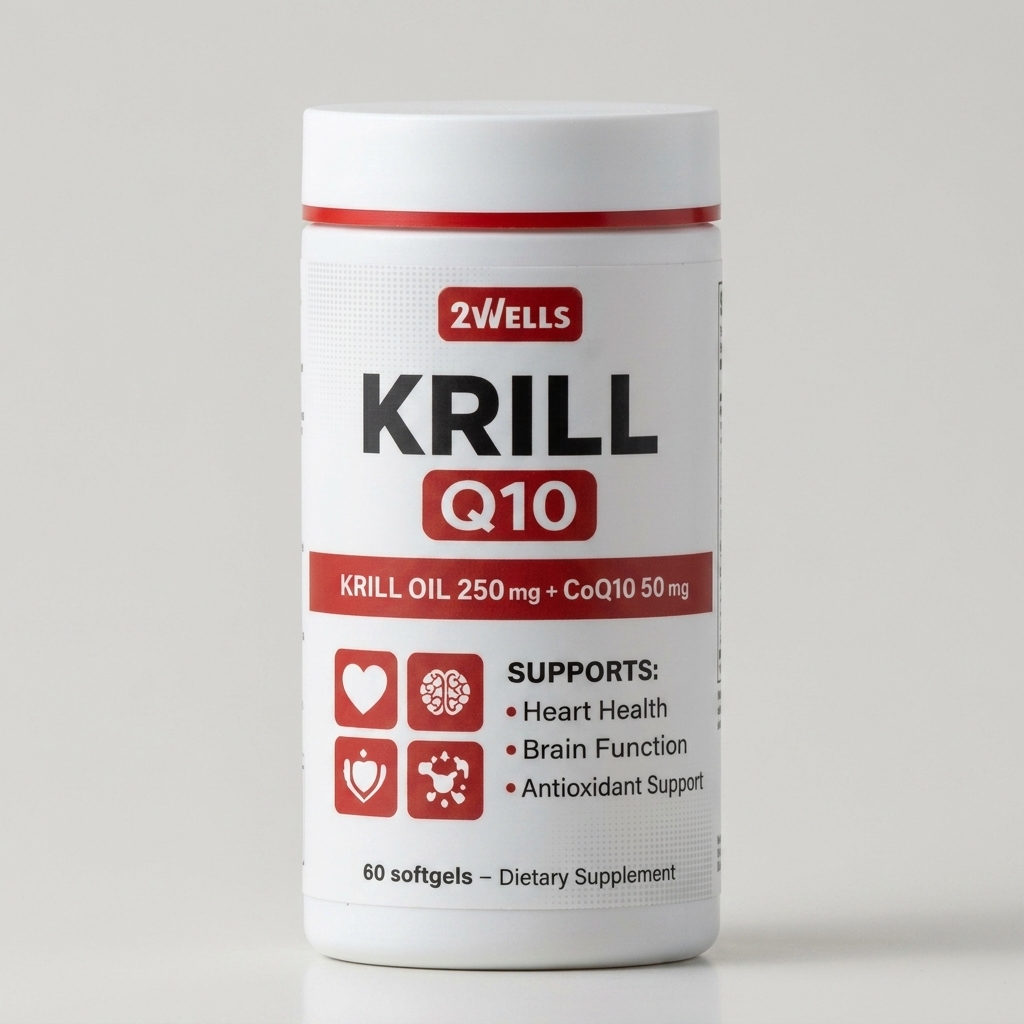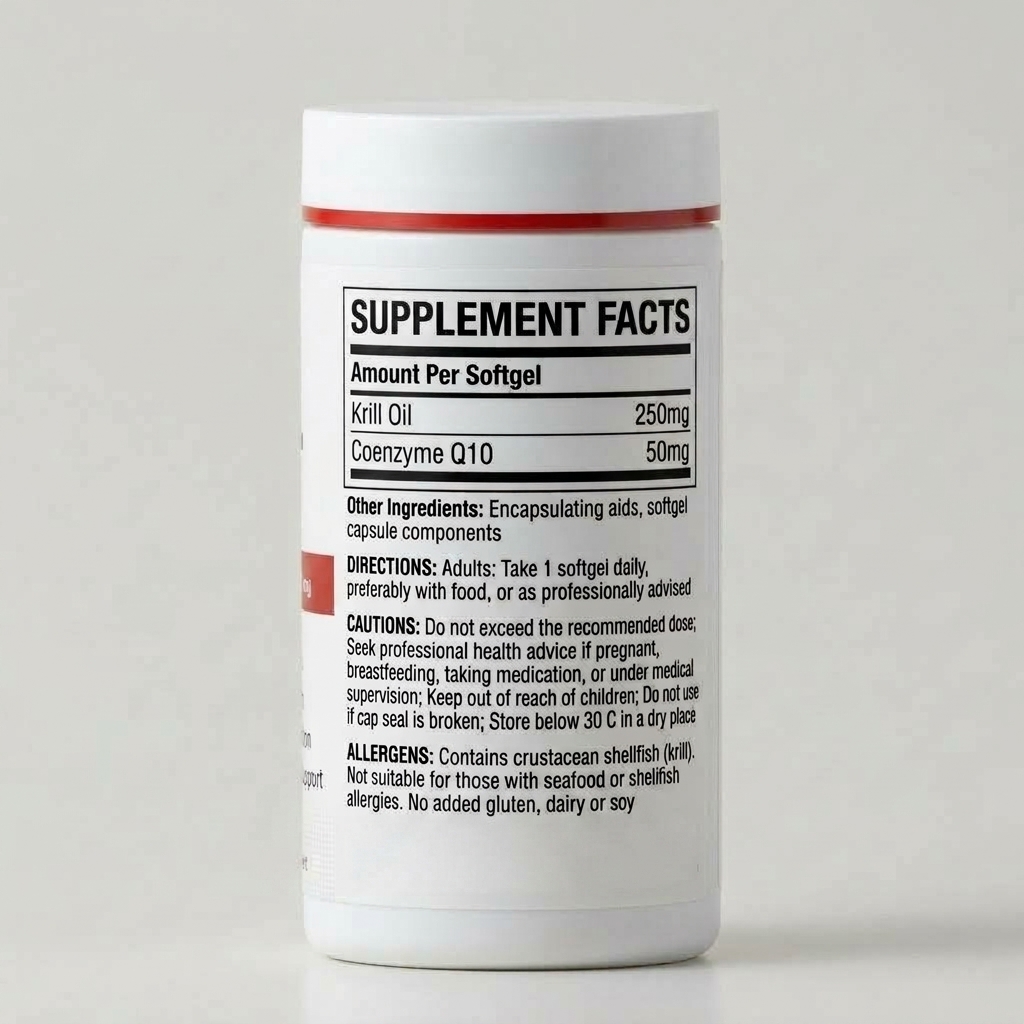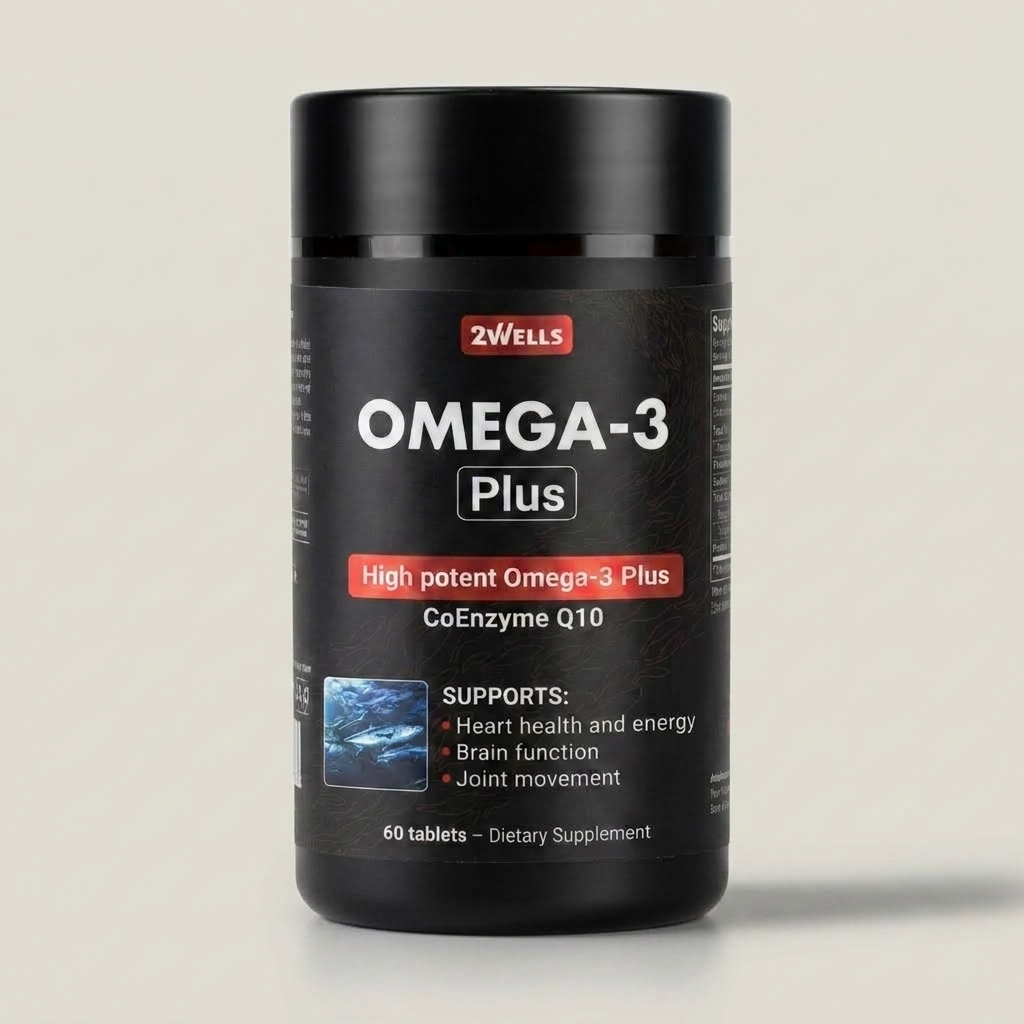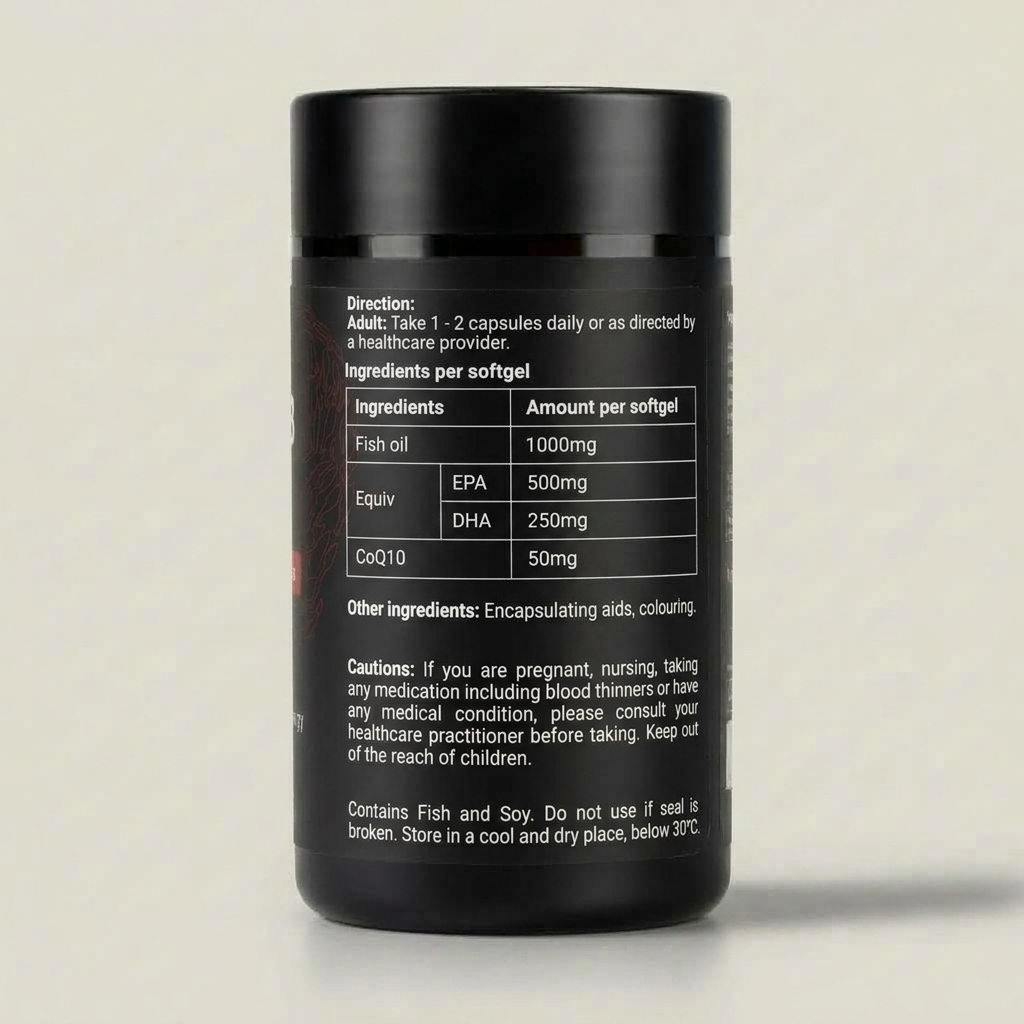
Krill oil and CoQ10 appear together in a lot of products aimed at people over 40. The pairing has a logic to it — the two address different parts of the same cellular picture — but the logic is easier to explain than to prove. This article covers what each one does, why they are combined, how krill oil differs from ordinary fish oil, and what the evidence supports.
What Krill Oil Brings
Krill oil supplies the omega-3 fatty acids EPA and DHA. Cleveland Clinic notes that omega-3s “help all the cells in your body function as they should” as components of cell membranes, and that they “are concentrated in high levels in cells in your eyes and brain.”
On cardiovascular effects, the clearest stated benefit is that omega-3s “help lower your triglyceride levels,” with possible effects on HDL cholesterol and blood pressure.
How it differs from fish oil
The structural difference is real: krill oil's omega-3s are bound to phospholipids rather than triglycerides, and phospholipids resemble the structure of human cell membranes. This is the basis for absorption claims. It is a plausible mechanism; it is not the same as a demonstrated clinical advantage, and the comparative evidence is less settled than marketing implies.
Krill oil also naturally contains astaxanthin, an antioxidant that helps protect the oil itself from oxidation — a genuine practical benefit for stability.
What CoQ10 Brings
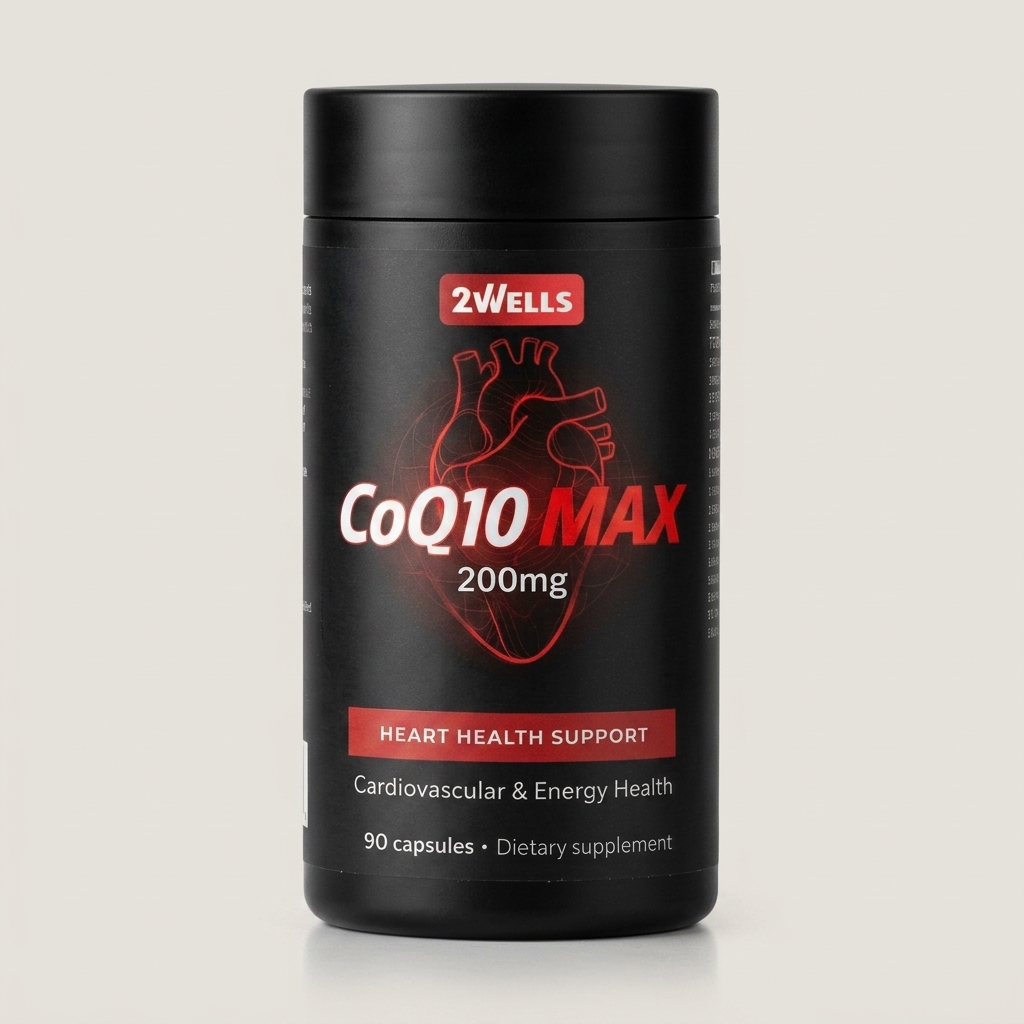
CoQ10 works on the energy side. StatPearls describes it as “crucial for efficiently transferring electrons within the mitochondrial oxidative respiratory chain,” the process that produces ATP. It also notes CoQ10 “improves blood vessel function by preserving nitric oxide.”
On evidence, StatPearls places level 1 support behind CoQ10 as an adjunct in moderate-to-severe heart failure, with levels 2–3 for migraine prevention, fibromyalgia and statin-related muscle pain. It emphasizes that more long-term studies are needed for most applications.
Why They Are Paired
The rationale is that they address different halves of the same system. Omega-3s are structural — they are part of what membranes are made from. CoQ10 is functional — it is part of how energy is produced inside those membranes. Supplying building material without supporting the process that uses it is, the argument goes, only half the job.
That reasoning is coherent. What it lacks is direct evidence that the combination outperforms either alone, which has not been established the way each ingredient's individual effects have been studied.
Why the Conversation Starts Around 40
Two threads converge. CoQ10 levels are linked to reduced circulating concentrations in specific conditions, and cardiovascular risk factors generally become more relevant with age. Neither amounts to a rule that everyone over 40 needs these supplements — and it is worth being clear that “over 40” is a marketing bracket rather than a clinical threshold.
Frequently Asked Questions
Is krill oil better than fish oil?
Structurally different, and plausibly better absorbed. Whether that produces better outcomes is not firmly established. Fish oil has the larger evidence base; krill oil typically costs more.
Do I need both together?
Not necessarily. They can be taken separately, which allows independent dosing. Combination products are convenient, not therapeutically superior in any demonstrated way.
Are there interactions?
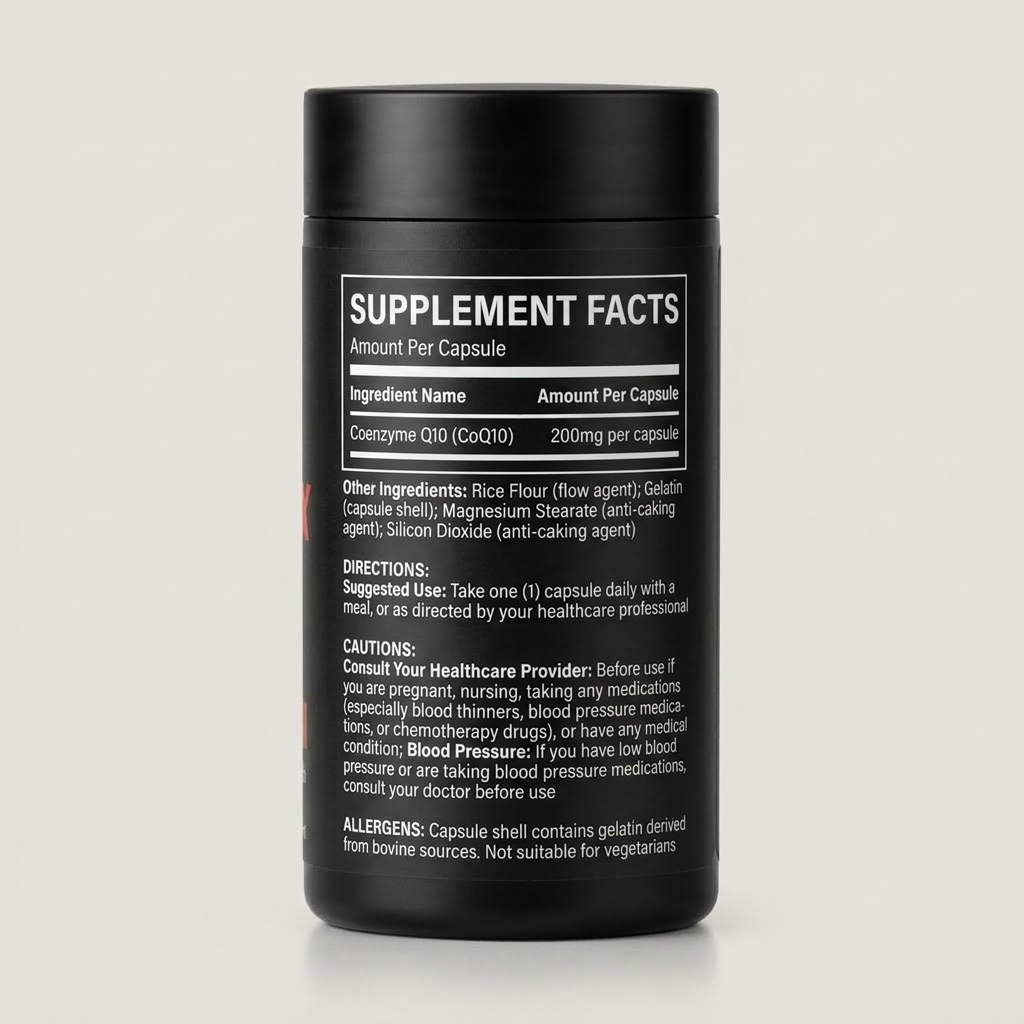
Both can matter. Omega-3s at higher doses may affect bleeding time, and CoQ10 can interact with anticoagulants such as warfarin. Tell your doctor what you are taking, particularly before surgery.
Can I get enough omega-3 from food?
Often yes. Cleveland Clinic states that “fish is the best source of omega-3s,” listing mackerel at 2.0g and farmed Atlantic salmon at 1.7g per 3-ounce serving. Regular oily fish is a reasonable alternative to a supplement.
Does CoQ10 help with tiredness?
It is essential to energy production, but the clinical evidence sits in specific conditions rather than general fatigue.
Key Takeaways
- Krill oil supplies EPA and DHA, which support cell function and are concentrated in eyes and brain
- Omega-3s help lower triglycerides; fish is the best dietary source
- Krill oil's phospholipid form is a plausible absorption advantage, not a proven clinical one
- CoQ10 is crucial to mitochondrial ATP production and helps preserve nitric oxide
- CoQ10's strongest evidence is as an adjunct in moderate-to-severe heart failure
- The combination is logical but has not been shown to outperform either ingredient alone
Conclusion
Both ingredients are well characterized, and the reasoning for combining them makes sense. What is missing is evidence that the pairing does more than its parts. If you eat oily fish regularly you may already be covered on the omega-3 side; if you are considering CoQ10 for a specific reason such as statin-related muscle symptoms, raise it with your doctor rather than deciding from a label.
Scientific References
- Omega-3 Fatty Acids & the Important Role They Play — Cleveland Clinic
https://my.clevelandclinic.org/health/articles/17290-omega-3-fatty-acids - Coenzyme Q10 — StatPearls, NCBI Bookshelf
https://www.ncbi.nlm.nih.gov/books/NBK531491/ - Omega-3 Fatty Acids — StatPearls, NCBI Bookshelf
https://www.ncbi.nlm.nih.gov/books/NBK564314/