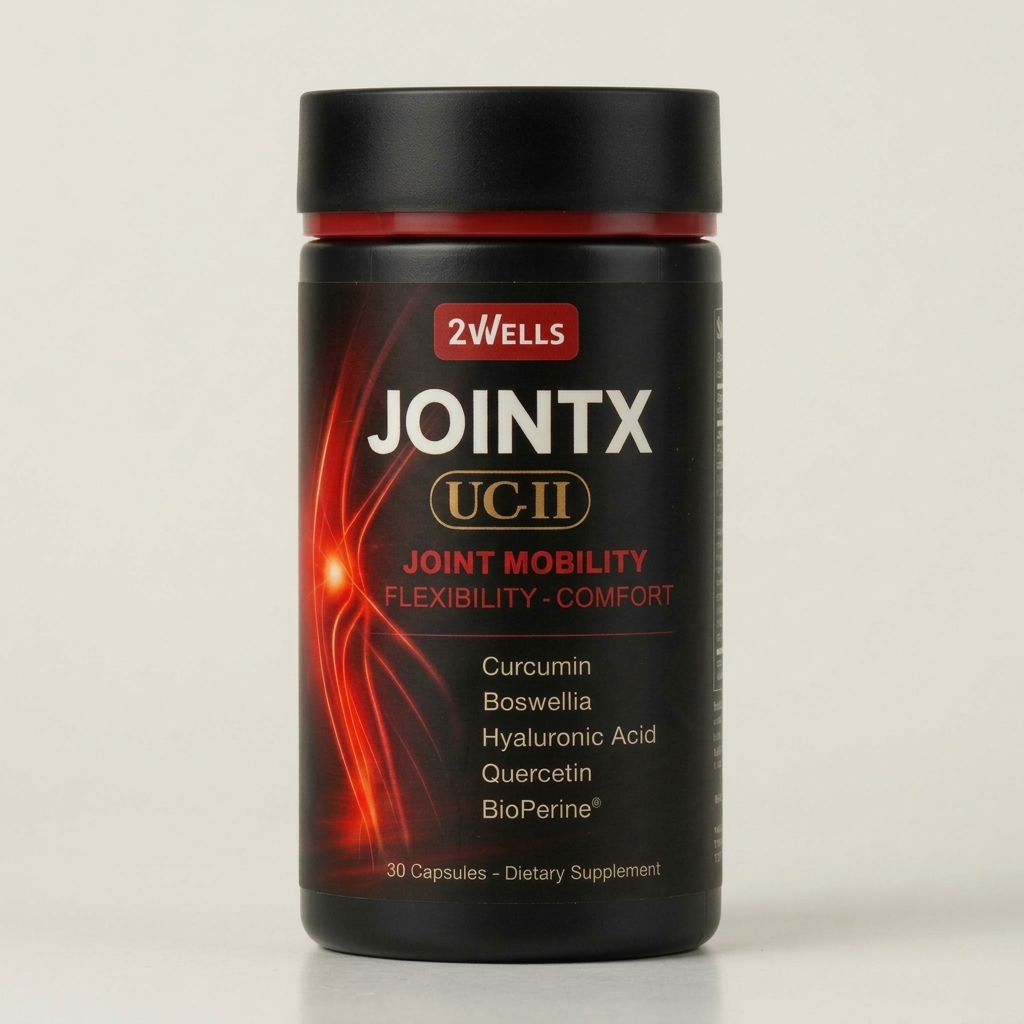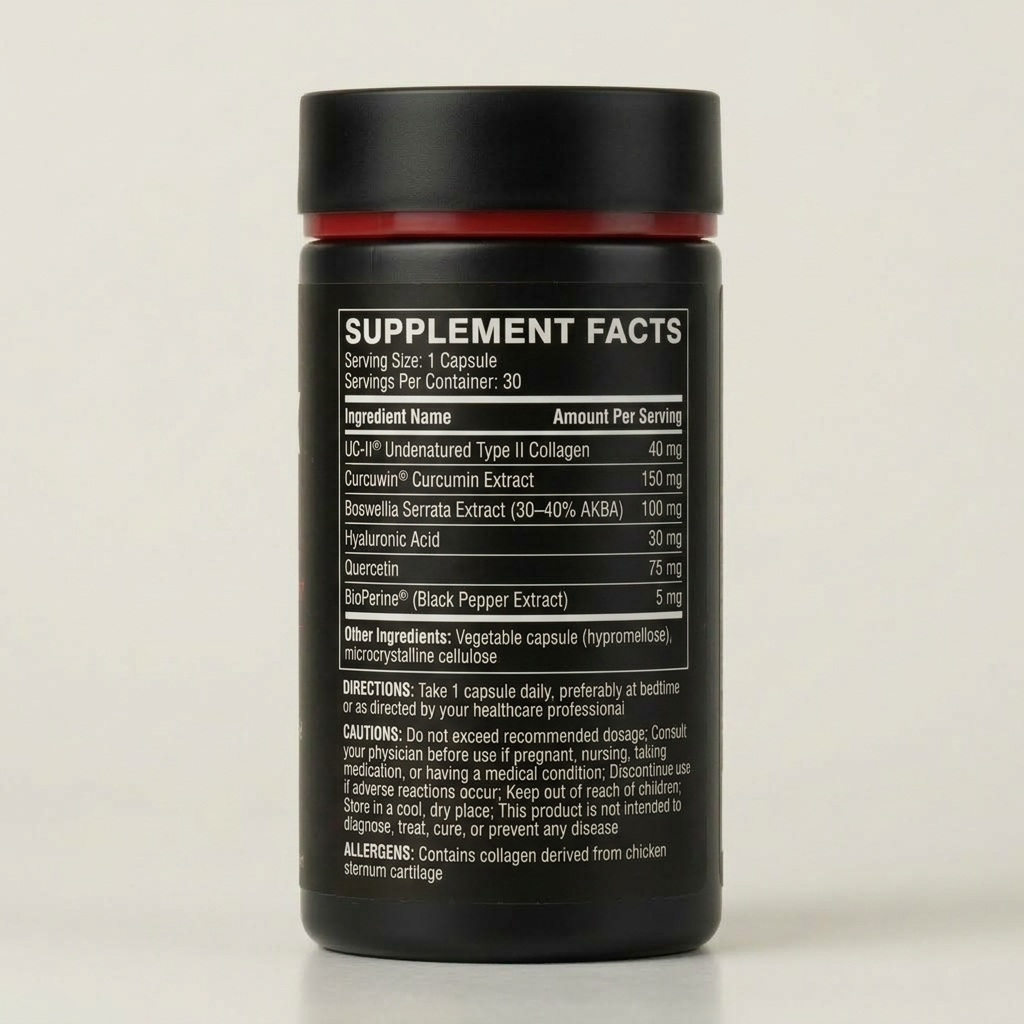
Collagen supplements are not one category. Two products can both say “collagen” on the front and contain materially different things, taken at doses that differ by a factor of a hundred. This article explains what separates undenatured type II collagen from the hydrolyzed peptides most products contain, why the dosing gap exists, and what the evidence currently supports — including where it is weaker than the marketing suggests.
What Collagen Is
Cleveland Clinic describes collagen as “the most abundant protein in your body,” making up “about 30% of your body's total protein,” whose “main role is to provide structure, strength and support throughout your body.”
It is not a single substance. The types differ by where they sit and what they do:
| Type | Where it is found |
|---|---|
| Type I | Makes up 90% of the body's collagen — skin, bones, tendons, ligaments |
| Type II | Found in elastic cartilage, which provides joint support |
| Type III | Found in muscles, arteries and organs |
Type II is the one specific to cartilage, which is why joint products single it out.
Hydrolyzed Collagen Peptides
Most collagen on the shelf is hydrolyzed — broken into short fragments called peptides, typically from bovine or marine sources, and typically type I and III. Hydrolysis makes it easier to absorb and to mix into a drink.
The reasoning is nutritional: supply the raw materials and support the body's own collagen production. Doses are correspondingly large, usually measured in grams.
Undenatured Type II Collagen
Undenatured type II collagen is processed very differently. Rather than being broken down, it is deliberately kept intact — “undenatured” means its three-dimensional structure is preserved. UC-II® is a branded, standardized form of this.
The proposed mechanism is not nutritional at all. Instead of supplying building blocks, an intact type II molecule is thought to interact with immune-mediated pathways in a way that influences how the body responds to cartilage. Whether that description holds up is a question for ongoing research rather than a settled matter.
Why the Doses Are So Different
| Hydrolyzed peptides | Undenatured type II | |
|---|---|---|
| Typical daily amount | Several grams | Around 40 milligrams |
| Processing | Broken into peptides | Structure kept intact |
| Usual types | Type I and III | Type II |
| Proposed mechanism | Supplies raw materials | Interacts with immune-mediated pathways |
The dose gap is the clearest signal that these are not the same product in different packaging. A nutritional approach needs enough material to matter. A signaling approach does not. Comparing the two on milligrams alone misreads what each is trying to do.
What the Evidence Supports
This deserves a straight answer. Cleveland Clinic's assessment of collagen peptides is that they are “possibly effective for improving skin hydration and skin elasticity” and “possibly effective for relieving pain” in knee osteoarthritis — adding that the benefits “may be more hyped in the media than the evidence behind it.”
“Possibly effective” is a real finding and a modest one. Undenatured type II collagen has a smaller research base than hydrolyzed peptides, much of it industry-funded, which is normal for a branded ingredient but worth knowing when weighing the claims.
Neither form has evidence approaching the effect of movement and weight management, which the NHS puts first for milder joint problems.
Frequently Asked Questions
Is one better than the other?
They are not straightforwardly comparable, because the proposed mechanisms differ. Neither has evidence strong enough to justify a confident recommendation over the other.
Can I take both?
There is no known reason they cannot be taken together, and some products combine them. Whether that adds benefit over either alone is not well established.
Why is the UC-II dose so small?
Because the proposed mechanism is a signaling one rather than a nutritional one. If the intent is to influence a pathway rather than supply material, gram quantities are not required.
Does collagen survive digestion?
This is the central question for the undenatured form, since its proposed mechanism depends on structure being preserved. It is an area of continuing research rather than something to state with confidence.
How long before any effect?
Studies in this area generally run for months rather than weeks. Products promising results within days are not reflecting how the research is conducted.
Key Takeaways
- Collagen is ~30% of the body's protein; type II specifically is found in cartilage
- Hydrolyzed peptides are broken down, usually type I and III, dosed in grams
- Undenatured type II keeps its structure intact and is dosed around 40mg
- The dose gap reflects genuinely different proposed mechanisms
- Evidence for collagen peptides is “possibly effective” for knee pain, and modest
- Undenatured type II has a smaller, largely industry-funded evidence base
Conclusion
The useful question is not which form is better, but what you expect a supplement to add. Both sit alongside the things with stronger evidence — regular movement, weight management, and addressing previous joint injury properly. If joint pain is limiting what you do, that is a conversation for a doctor or physiotherapist before it is a decision about which collagen to buy.
Scientific References
- Collagen — Cleveland Clinic
https://my.clevelandclinic.org/health/articles/23089-collagen - Osteoarthritis — NHS
https://www.nhs.uk/conditions/osteoarthritis/