Strong bones are built during childhood — not adulthood. In fact, up to 90% of peak bone mass is developed by late adolescence. That’s why ensuring proper nutrition early in life is critical. If you’re searching for ways to support your child’s bone health, understanding the key nutrients involved is the first step.
Here are the five essential nutrients that play a central role in children’s bone development.
1. Calcium – The Foundation Mineral
Calcium is the primary mineral found in bones and teeth. During childhood and adolescence, the body requires consistent calcium intake to support bone growth and density.
When dietary intake is insufficient, the body may draw calcium from bones to maintain other physiological functions. Over time, this can affect bone strength.
Good sources include:
- Milk and dairy products
- Leafy greens
- Fortified foods
- Calcium supplements for kids (when needed)
For many families, a chewable calcium supplement for kids can help support daily intake, especially for picky eaters.
2. Vitamin D – The Absorption Helper
Calcium alone is not enough. Vitamin D plays a crucial role in helping the body absorb calcium efficiently from food.
Without adequate vitamin D, calcium absorption may be reduced — even if intake is sufficient.
Vitamin D sources:
- Sunlight exposure
- Fatty fish
- Fortified milk
- Vitamin D supplements
Many parents choose a Calcium + D3 supplement for kids to ensure both nutrients work together.
3. Vitamin K2 – The Calcium Director
Vitamin K2 is often overlooked, but it plays a unique role in bone metabolism. It helps activate proteins that guide calcium into bones.
Think of it as a traffic director — helping support proper calcium utilization.
When included in a Calcium D3 K2 supplement for kids, this trio creates a more comprehensive bone support system.
4. Magnesium – The Support Mineral
Magnesium contributes to bone structure and works alongside calcium in bone development. While usually obtained from diet, children with limited vegetable intake may fall short.
Sources include:
- Nuts and seeds
- Whole grains
- Leafy vegetables
5. Protein – The Structural Component
Bone is not made of minerals alone. It also contains protein matrix that provides flexibility and strength.
Ensuring children receive adequate protein from balanced meals supports overall growth and skeletal development.
Why a Combined Approach Matters
Instead of focusing on a single nutrient, a well-designed kids bone health supplement combines calcium, vitamin D3, and vitamin K2 to support:
- Bone density
- Calcium absorption
- Proper mineral distribution
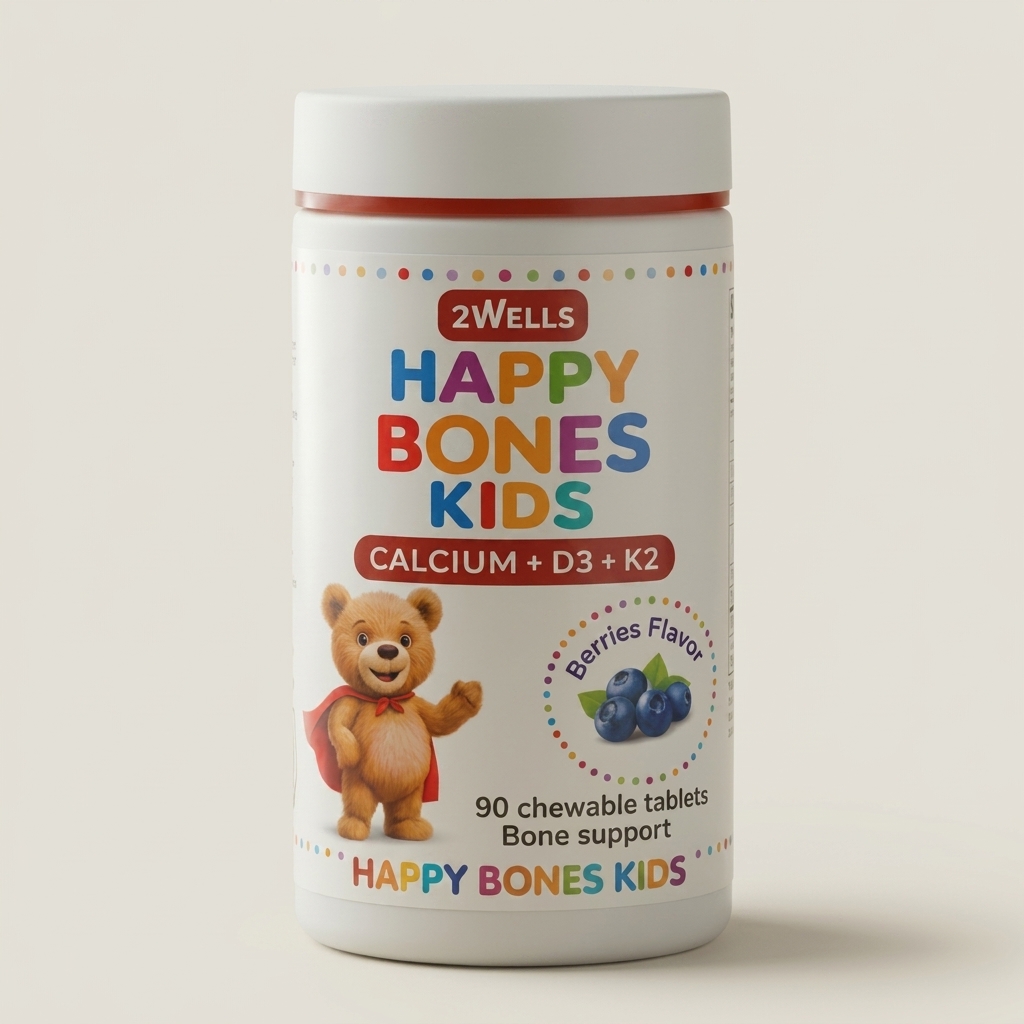
Products like 2WELLS Happy Bones Kids provide a chewable format that is convenient and kid-friendly.
Final Thoughts
Building strong bones is a long-term process. Healthy eating, outdoor activity, and balanced nutrient intake all contribute to supporting your child’s skeletal development.
If you’re exploring a children’s calcium supplement with D3 and K2, look for:
- Age-appropriate dosing
- Quality ingredients
- Clear labeling
Strong foundations today help support active futures tomorrow.