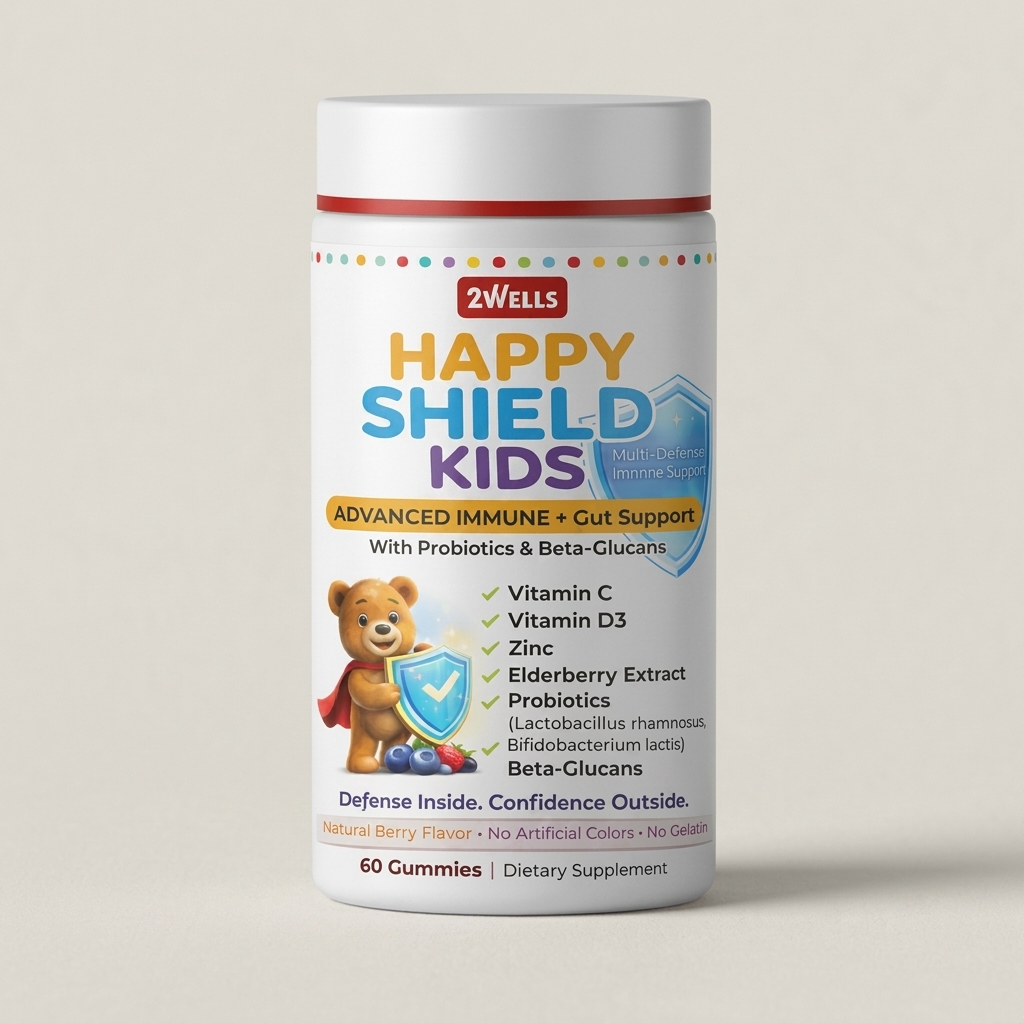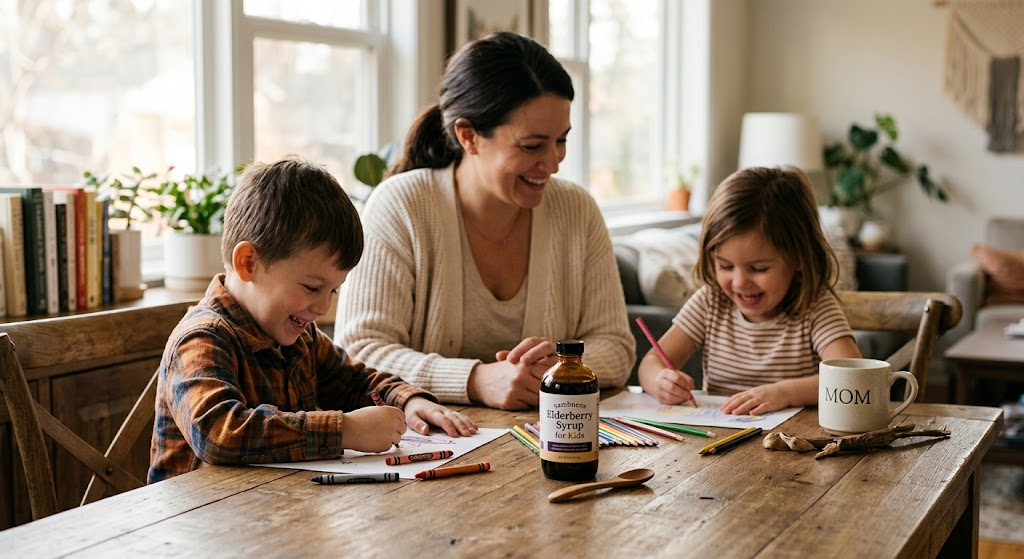
Elderberry appears in a great many children's immune products, usually as a syrup or gummy, and usually with confident claims attached. It also has a genuine safety consideration that rarely gets equal billing. This article covers what elderberry is, what is claimed, what parents should know about preparation, and how it compares with nutrients that have clearly defined immune roles.
What Elderberry Is
Elderberry is the fruit of the Sambucus shrub, most commonly Sambucus nigra, the European elder. The berries are rich in anthocyanins — the pigments that make them dark — which have antioxidant properties in laboratory settings. It has a long history of traditional use in European folk medicine for colds and flu.
The Safety Point That Should Come First
Raw elderberries, along with the leaves, stems and bark of the plant, contain compounds that can release cyanide and can cause nausea, vomiting and diarrhea if consumed uncooked. This is why commercial elderberry products are cooked or otherwise processed.
The practical implications for parents: never give raw elderberries to a child, do not make preparations from a garden elder without knowing what you are doing, and buy from established manufacturers. This is a genuine consideration rather than an abundance of caution — and it is the sort of thing marketing tends to leave out.
What Is Claimed, and What Is Established
Elderberry is usually marketed for reducing the duration or severity of colds and flu. Some small trials have reported effects in this direction. The research base is limited in size, several studies are industry-funded, and results have not been consistently replicated at the scale that would make the finding firm.
That is not a reason to dismiss it. It is a reason to hold it loosely — a plausible ingredient with preliminary support, not an established intervention. It sits some distance from the nutrients below, which have defined physiological roles in official guidance.
Nutrients With Defined Immune Roles
| Nutrient | Role, per the NHS | Sources |
|---|---|---|
| Vitamin C | Helps protect cells and keep them healthy; supports skin, blood vessels, bones and cartilage; helps wound healing | Citrus, peppers, strawberries, blackcurrants, broccoli, Brussels sprouts, potatoes |
| Zinc | Making new cells and enzymes; processing carbohydrate, fat and protein; wound healing | Meat, shellfish, dairy, bread |
| Vitamin D | Regulates calcium and phosphate, needed for healthy bones, teeth and muscles | Mainly sunlight; few foods |
The NHS notes vitamin C “cannot be stored in the body, so you need it in your diet every day” — which is an argument for regular fruit and vegetables rather than for occasional high doses.
What Helps a Child Through Cold Season
- Adequate sleep, which affects immune function directly
- A varied diet covering vitamin C, zinc and the rest
- Vitamin D through autumn and winter, when sunlight cannot supply it
- Handwashing, which remains among the most effective measures available
- Time outdoors and ordinary activity
None of this is exciting, which is precisely why supplements sell.
Frequently Asked Questions
Is elderberry safe for children?
Commercially prepared products taken as directed are generally regarded as safe for children over the manufacturer's stated age. Raw berries, leaves, stems and bark are not safe. Check the age guidance on the product.
Does it shorten colds?
Some small studies suggest it may. The evidence is limited and not consistently replicated, so it is reasonable to try and unreasonable to rely on.
Can I make elderberry syrup at home?
Only with proper knowledge of preparation, since raw berries and plant parts are not safe. For most families a commercial product is the sensible option.
Is elderberry better than vitamin C?
They are not comparable. Vitamin C has a defined physiological role and an established daily requirement; elderberry is a botanical with preliminary evidence.
When should I see a doctor?
For a high fever, breathing difficulty, dehydration, an illness that is worsening rather than improving, or any symptom that concerns you. Supplements should never delay that.
Key Takeaways
- Elderberry is the fruit of the Sambucus shrub, with a long traditional use for colds
- Raw berries, leaves, stems and bark are unsafe — commercial products are processed for this reason
- Evidence for shortening colds is preliminary, limited in size and not consistently replicated
- Vitamin C, zinc and vitamin D have defined roles in official guidance
- Vitamin C cannot be stored, so daily dietary intake matters
- Sleep, diet, winter vitamin D and handwashing remain the fundamentals
Conclusion
Elderberry is a reasonable thing to try and a poor thing to depend on. If you use it, buy a commercially prepared product, follow the age guidance, and keep raw plant material away from children. And keep the basics in place underneath it — sleep, varied food, winter vitamin D and handwashing do more than any syrup, however pleasant it tastes.
Scientific References
- Vitamin C — NHS, Vitamins and minerals
https://www.nhs.uk/conditions/vitamins-and-minerals/vitamin-c/ - Others (zinc, magnesium, beta-carotene) — NHS, Vitamins and minerals
https://www.nhs.uk/conditions/vitamins-and-minerals/others/ - Vitamin D — NHS, Vitamins and minerals
https://www.nhs.uk/conditions/vitamins-and-minerals/vitamin-d/