B vitamins are marketed as energy vitamins, which is true in a narrower sense than the advertising implies. They do not supply energy the way food does, and they are not stimulants. What they do is act as cofactors in the reactions that release energy from the food you have already eaten. This article explains what each one does, what “active form” means on a label, and when the distinction is worth paying for.
What “Energy” Actually Means Here
The phrasing used by the NHS is precise and worth borrowing: B vitamins help the body “break down and release energy from food.” They are part of the machinery, not the fuel. A person who is well-nourished and still tired will not usually feel a jolt from taking them, because the machinery was not the limiting factor.
This also explains why B vitamins do not cause the stimulation that caffeine does. Nothing in their mechanism raises alertness directly.
What Each B Vitamin Does
| Vitamin | Role, per the NHS |
|---|---|
| Thiamin (B1) | Helps the body break down and release energy from food; keeps the nervous system healthy |
| Riboflavin (B2) | Keeps skin, eyes and the nervous system healthy; helps release energy from food |
| Niacin (B3) | Helps release energy from food; keeps the nervous system and skin healthy |
| Vitamin B6 | Helps use and store energy from protein and carbohydrates; helps form hemoglobin, which carries oxygen in red blood cells |
| Vitamin B12 | Helps make red blood cells, keeps the nervous system healthy, releases energy from food, and helps the body use folate |
Two themes run through the list: energy metabolism and nervous system function. The B6 and B12 entries add a third — oxygen transport, through their role in red blood cells.
What “Active Form” Means
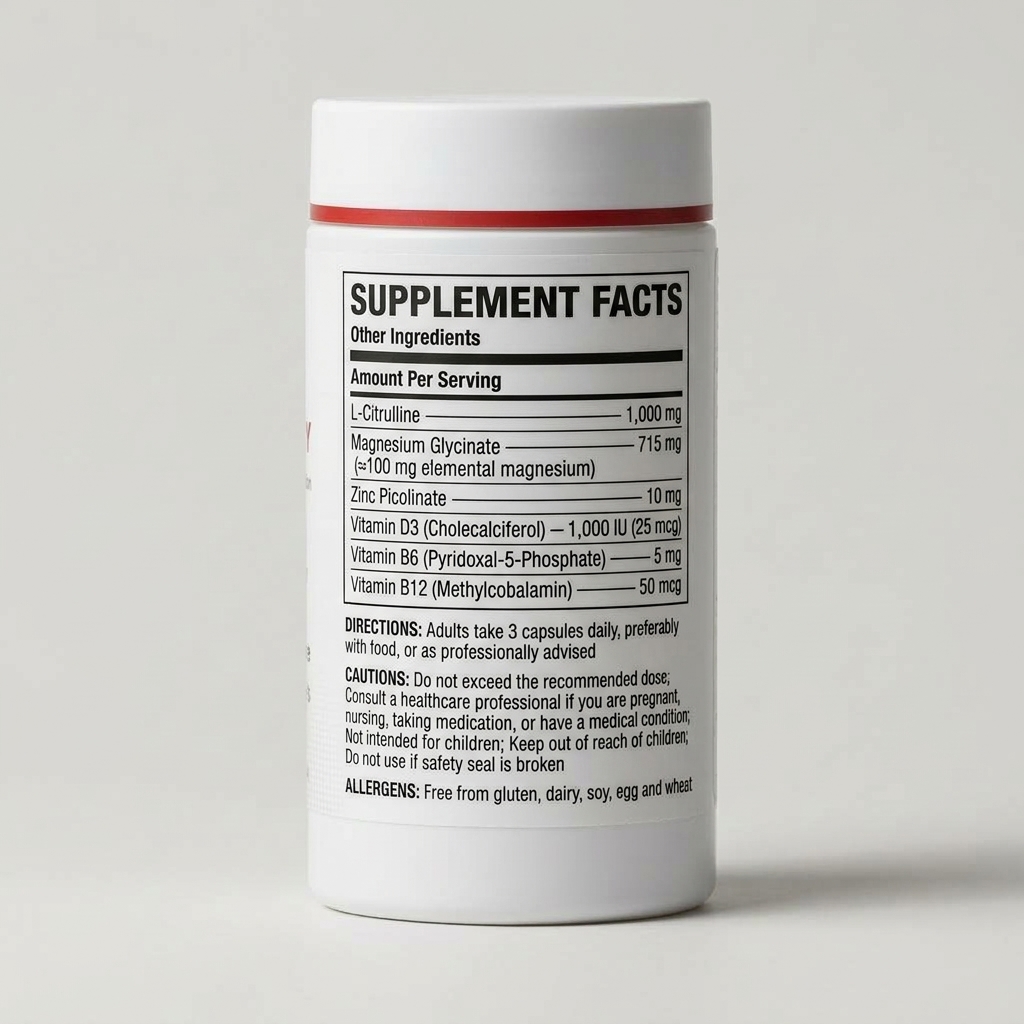
Most B vitamins are not biologically active as they appear on a label. The body converts them into an active form before they can be used. Pyridoxine (a common form of B6) is converted to pyridoxal-5-phosphate; cyanocobalamin (a common form of B12) is converted to methylcobalamin or adenosylcobalamin.
Supplements described as using “active” or “methylated” forms supply the converted version directly — P5P rather than pyridoxine, methylcobalamin rather than cyanocobalamin. The rationale is that this skips a conversion step.
How much that matters is an open question for most people. Conversion is not usually a bottleneck in a healthy adult. It becomes more relevant for people with genetic variations that reduce conversion efficiency, and this is an area where the evidence is still developing rather than settled.
Who Is Most Likely to Fall Short
B12 is the one that most often runs low, because of where it is found. The NHS notes that B12 is not naturally present in fruit, vegetables or grains, so people following vegan diets may not get enough. Adults aged 19 to 64 need around 1.5 micrograms a day.
Older adults are another group worth mentioning, as absorption of B12 tends to decline with age even when dietary intake is adequate.
Frequently Asked Questions
Will B vitamins give me more energy if I am not deficient?
Generally not. They enable energy release from food rather than providing stimulation, so topping up a level that is already sufficient does not add much.
Are methylated forms worth the extra cost?
For most people the difference is likely to be small. They are more relevant for those with reduced conversion capacity. The evidence here is developing, and anyone claiming certainty in either direction is overstating it.
Can I take too much?
B vitamins are water-soluble and excess is largely excreted, which makes them more forgiving than fat-soluble vitamins. That is not a reason to take very high doses; some, including B6, have documented upper limits.
Should I take a B complex or individual vitamins?
A complex is usually the simpler approach, since these vitamins work across the same pathways. Individual supplementation makes more sense when a specific deficiency has been identified.
Key Takeaways
- B vitamins release energy from food rather than supplying energy or stimulation
- Thiamin, riboflavin and niacin all support energy release and nervous system health
- B6 supports energy from protein and carbohydrates, and helps form hemoglobin
- B12 supports red blood cells, nervous system health, energy release and folate use
- Active forms skip a conversion step; how much this matters varies between individuals
- Vegans and older adults are the groups most likely to be short on B12
Conclusion
If you are persistently tired, B vitamins are worth understanding but are rarely the whole answer. Sleep, iron status, thyroid function and stress are all more common explanations. A sensible first step is a conversation with your doctor and, if appropriate, a blood test — which tells you whether there is a gap to fill before you start filling it.
Scientific References
- B vitamins and folic acid — NHS, Vitamins and minerals
https://www.nhs.uk/conditions/vitamins-and-minerals/vitamin-b/ - Others (zinc, magnesium, beta-carotene) — NHS, Vitamins and minerals
https://www.nhs.uk/conditions/vitamins-and-minerals/others/