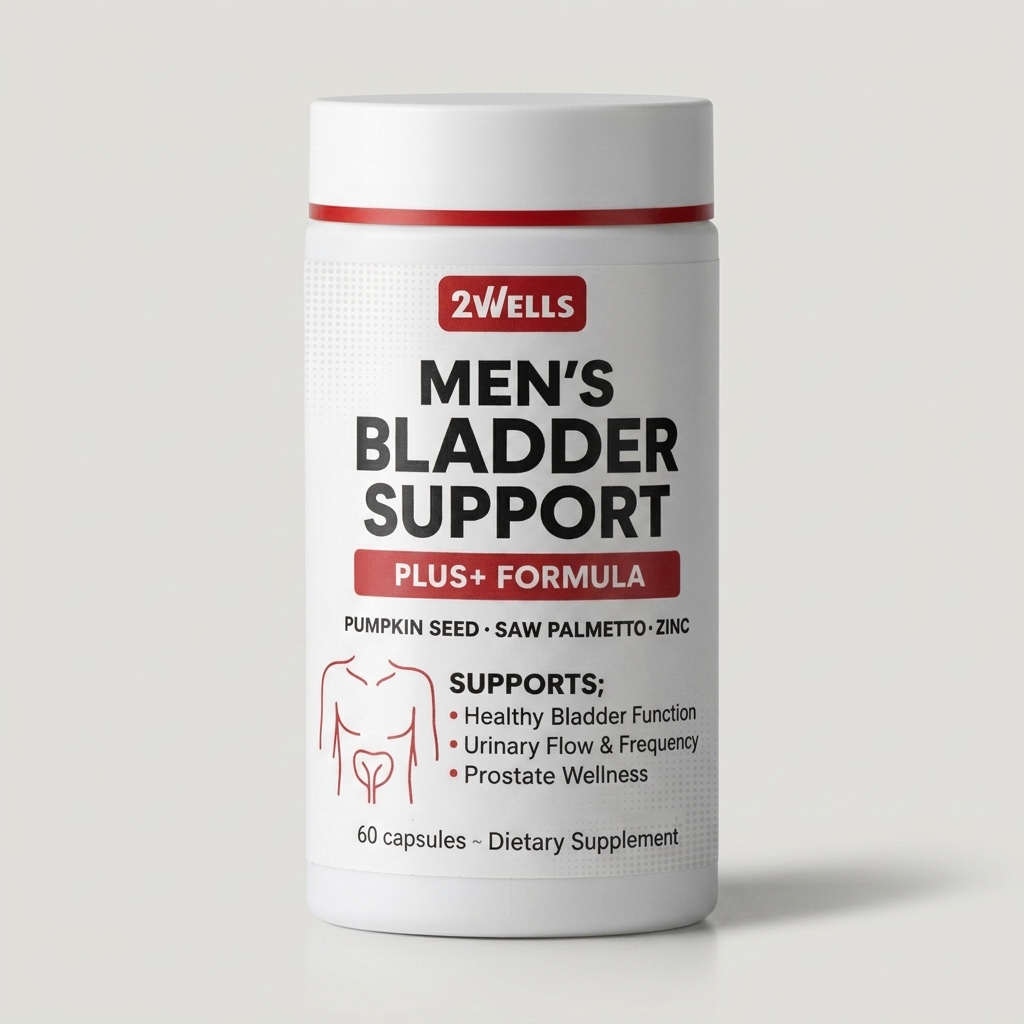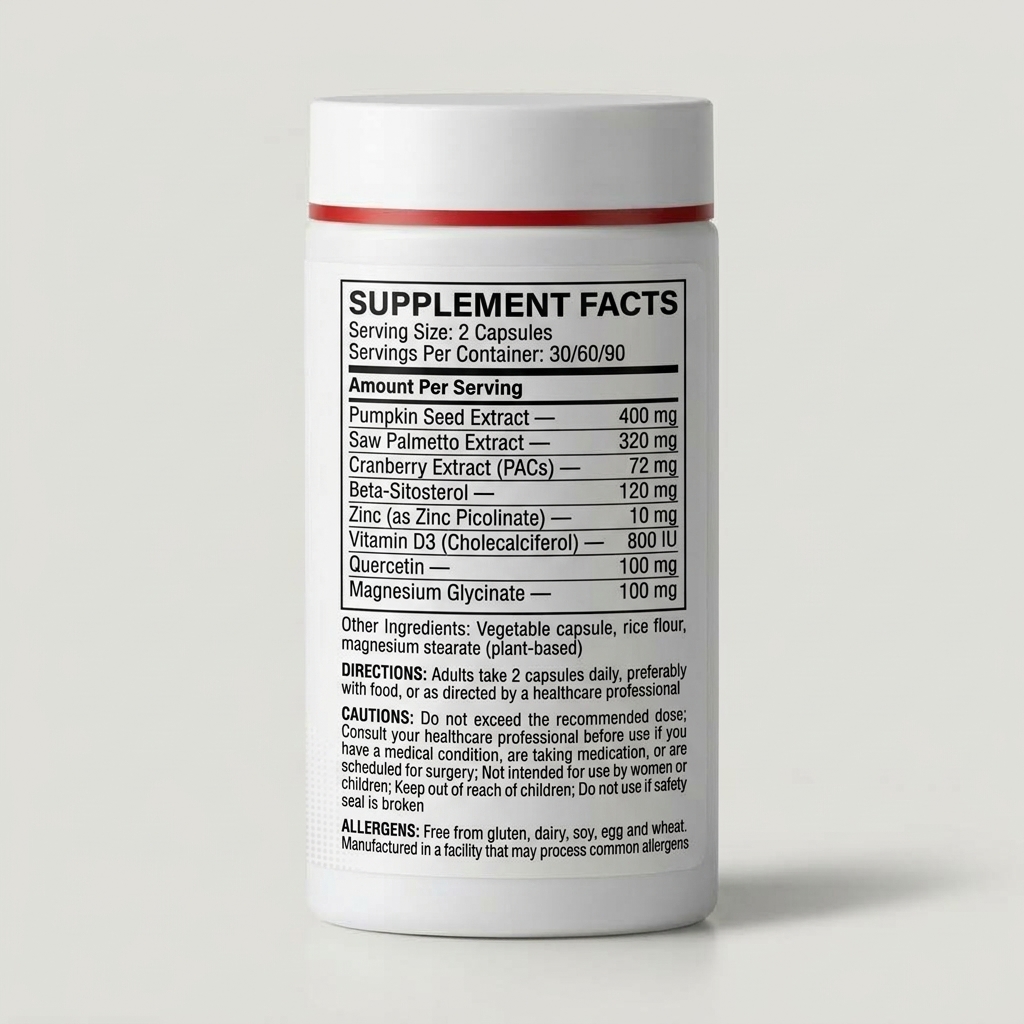
Pumpkin seed extract and saw palmetto appear in most men's bladder and prostate supplements sold today. They have long histories of traditional use and a large amount of marketing behind them. What they do not have is the evidence base that marketing implies. This article covers what each ingredient is, what is claimed for it, what controlled research shows, and what the honest conclusion is for someone deciding whether to take them.
Why These Two Ingredients Are Everywhere
Both have been used traditionally for urinary complaints — saw palmetto berry in North America, pumpkin seed across Europe. That traditional use is genuine and is why they were investigated in the first place. It is not, by itself, evidence of effect.
The condition they are marketed for is usually benign prostate enlargement. The NHS describes this as “when your prostate gets bigger,” notes it is “common and is not usually serious,” and that it is “most common in men over 50 years old.”
What the Controlled Evidence Says
Here is the finding that matters most, and it is not the one supplement marketing leads with. StatPearls' clinical review of benign prostatic hyperplasia states:
No prepared dietary supplement has been proven to help BPH in properly performed, randomized, controlled studies.
That statement covers this whole category, saw palmetto and pumpkin seed included. It is worth being precise about what it means and does not mean. It does not mean these ingredients are harmful, or that nobody experiences benefit. It means that when tested under conditions designed to separate real effects from expectation, the effect has not been demonstrated.
Saw palmetto in particular has been studied more than most botanical supplements. Earlier, smaller trials were more encouraging than the larger and better-controlled ones that followed — a pattern common in nutrition research, and a reason to weight larger, later studies more heavily.
What Does Have Evidence
If the goal is fewer urinary symptoms, the measures with actual support are unglamorous. The NHS lists reducing alcohol and caffeine, maintaining a healthy weight, and pelvic floor muscle training among self-help measures for an enlarged prostate.
Where those are not enough, established medicines exist — the NHS names tamsulosin, doxazosin and alfuzosin — along with procedures such as transurethral resection of the prostate for more significant cases. These have the evidence base the supplements lack.
So Should You Take Them?
That is a reasonable personal decision, and this article is not going to pretend otherwise. Points worth weighing:
- Controlled evidence does not currently support these supplements for BPH
- They are not generally regarded as harmful at typical doses, though saw palmetto can interact with some medications
- Money and attention spent here is money and attention not spent on measures that do have support
- Most importantly, supplements should not delay assessment — urinary symptoms deserve a proper look
If you take them and find them helpful, there is no strong reason to stop. Just do not let them substitute for a conversation with a doctor.
Frequently Asked Questions
Why do so many products contain these if the evidence is weak?
Traditional use, consumer familiarity and the absence of a requirement to prove efficacy before sale all contribute. Popularity in a supplement category is not a reliable signal of evidence.
Are they safe?
Generally well tolerated at typical doses. Saw palmetto can interact with some medications, including anticoagulants, so tell your doctor what you are taking — particularly before surgery.
Does pumpkin seed oil differ from pumpkin seed extract?
They are different preparations and not interchangeable. Neither has controlled evidence supporting use for BPH.
What about the studies cited on product pages?
Worth checking the details: size, duration, whether there was a placebo group, and who funded it. Small, short, unblinded or industry-funded studies are common in this area and are weaker evidence than they appear.
Should I stop taking them?
That is for you and your doctor. The more important point is not to let a supplement delay assessment of symptoms that have effective treatments available.
Key Takeaways
- Both ingredients have genuine traditional use, which is not the same as clinical evidence
- StatPearls reports no dietary supplement proven to help BPH in properly conducted controlled studies
- Larger, better-controlled saw palmetto trials have been less encouraging than earlier small ones
- Alcohol and caffeine reduction, weight management and pelvic floor training do have support
- Established medicines and procedures exist for symptoms that self-help does not resolve
- Tell your doctor what you take — saw palmetto can interact with some medications
Conclusion
Being straight about this is more useful than being encouraging. These are popular ingredients with a long history and a thin controlled evidence base for the thing they are sold for. If urinary symptoms are affecting your sleep or your day, the highest-value step is not choosing a supplement — it is getting assessed, because the conditions behind those symptoms have treatments that are known to work.
Scientific References
- Benign Prostatic Hyperplasia — StatPearls, NCBI Bookshelf
https://www.ncbi.nlm.nih.gov/books/NBK558920/ - Enlarged prostate (benign prostate enlargement) — NHS
https://www.nhs.uk/conditions/prostate-enlargement/